Dear Friends,
The question for this post is should the United States base its economic system on capitalism as the best way to advance the economic interests and provide better living conditions for all in a sustainable manner and is such an economic system the best one to strive for the goal of true equality of opportunity for all.
The logical conclusion of my three prior posts on Capitalism in America is that if we are to approach true equality of opportunity, it is the society primarily through its government which must provide the love and inclusion; food, shelter and clothing; healthcare; education; and security that are critical to equal opportunity. In that case what is the role of capitalism? What are the cases in which an enterprise whose mission is to make money, will do a better job of providing goods or services than a government agency whose mission is to provide goods or services in an efficient and fair manner?
In the case of security, I have no doubt that it should be provided to the society by various levels of government. The goal of any society should be to constantly reduce the need for security, reduce crime, reduce emergencies like fires and reduce worldwide tensions that lead to conflicts and war. If a for profit enterprise were in charge of security, its profits would increase as the need for the services increased. There would be no incentive to reduce the need for those services or to work with other parts of the society to do so. So the police, fire and military should all be government agencies. Those agencies should not be permitted to outsource their jobs to for profit contractors for all the same reasons.
The same logic applies to the suppliers of job specific goods for security. For example, a for profit manufacturer of guns, ammunition, tanks, warplanes, etc. has an incentive to make money by selling more of these goods to the government which is in direct competition with the goal of the society. The government should make all of this type of good.
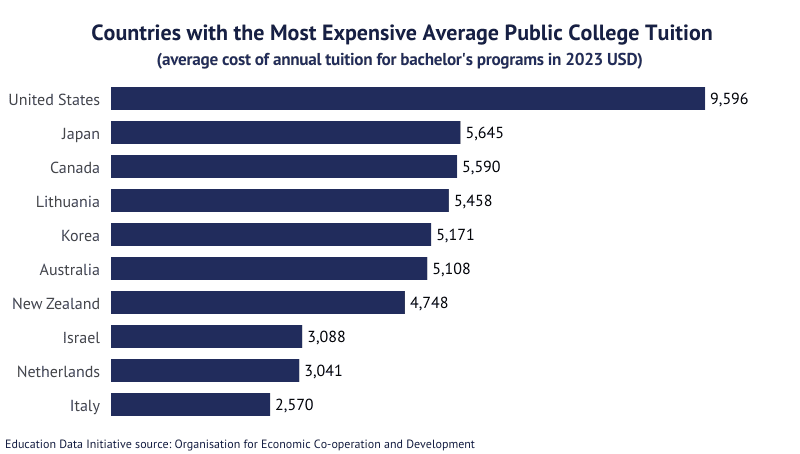
The goal of public education is to ensure that all members of the society have the education necessary to have equal opportunity. For profit schools have the goal of making money. I would not ban for profit schools or private not for profit schools, but I believe the government must provide free public education to all from infancy through university. This public education must be of the highest quality and provide all the education to ensure equality of opportunity. It must also be paid for by all the members of the society not just those who benefit directly. If the billionaire class can have their children educated in schools that are better and/or offer more options than the public schools, there will never be true equality of opportunity. That is not to say that all schools must offer all courses or activities, but it does say that within a community all students must have true access to all the courses and activities.
Healthcare is very much like education. All people are entitled to high quality healthcare. All people must have equal access to the best physicians and medical facilities regardless of their ability to pay. The goal of the society is to provide high quality healthcare to all and to reduce the need for healthcare. For profit healthcare providers make more money the more people they see and the more procedures they do. Neither the healthcare providers nor the insurance companies have any long term interest in reducing an individual's need for healthcare services but the society has exactly that interest. That is not to say that there could not be for profit doctors and hospitals. Private hospitals and clinics could offer services beyond those needed for the healthcare. For example if a private room were not necessary to provide the same level of care, a person with the money could pay for a private room. But a healthcare system where people with money get a higher quality of care than those with less money will never provide equal opportunity for all.
In the area of food, shelter and clothing, there is more room for capitalism to play a role. The society's goal is to be sure that all people have the food, shelter and clothing appropriate to have true equal opportunity in life. In a society where the government provides the security, education and healthcare sufficient to provide everybody with true equal opportunity, if the government also provides a minimum annual income to all to cover the cost of the appropriate food, clothing and shelter as well as a reasonable amount for other costs of living, a well regulated capitalist system would work well to provide these items.
One very clear exception to this approach is the provision of the goods and services that can be provided more efficiently through a monopoly or an oligopoly. Municipal water, electricity, gas, etc. are prime examples. Those items should be provided by and run by various levels of government to provide these services to all on an equal and fair basis. The internet is a complex issue in this regard. The government should not determine the content but neither should the biggest content providers be able to make access to some content more expensive than other content. Internet access for all should be a goal of society as should equal access to the internet by all content providers. If the government supplies the internet access to all, it can insure that all content providers have equal access without censoring access by some.
Capitalism as practiced in the United States has made the goal of love and inclusion for all more difficult not easier. The extreme disparity in wealth and income has created huge divisions and those with power/money have used those divisions to secure for themselves more power/money. Capitalism must be regulated to provide for true equality of opportunity. That is not to say that everybody must have or make the same amount of money. If a person can make more money than somebody else because he works harder or has an aptitude that demands higher pay, that is a fine result. On the other hand if a person makes more money than somebody else because he got the money from his parents or had more opportunity than others, that is a result we should be trying to avoid.
So I have concluded that the best approach to achieving true equality of opportunity is to reform not through out our current economic system. As a result, my next few posts on this subject will discuss the constitutional and legislative changes needed.
Thanks for reading and please comment,
The Unabashed Liberal